Lymphoma Cancer Support Pack
R3820,00
- There is a lifetime 10% discount for products when testing is ordered, should you want to do this please contact us before purchasing online.
The Lymphoma Support Pack combines selected nutrients with antiviral and pathway-focused medicines. It supports immune health, gut health, nutrition and selected cell pathways. Patients can use the pack alongside their current haematology and oncology care.
Lymphoma includes many different subtypes. The exact diagnosis, treatment plan, blood results and current medicines all affect how the pack should be used.
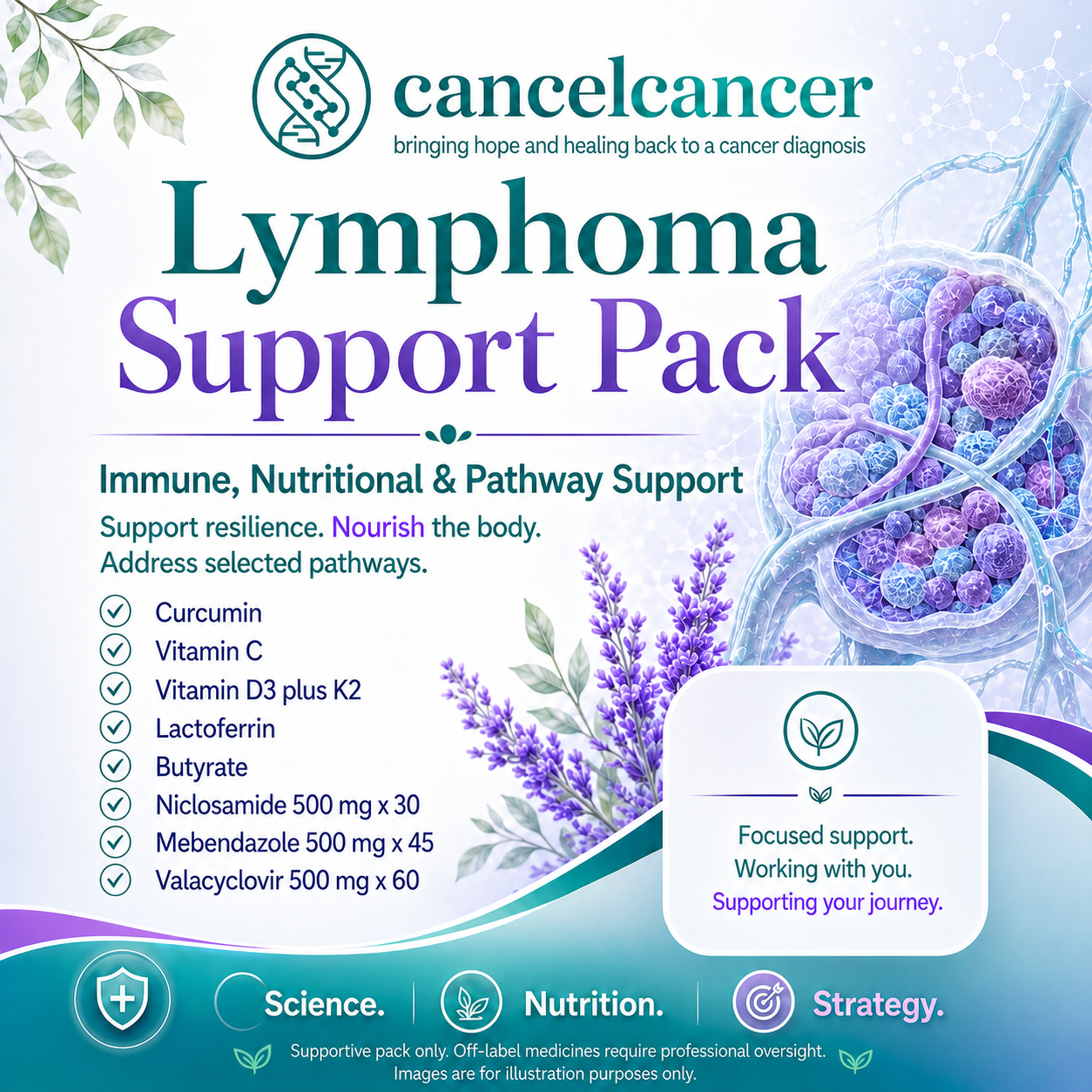
What Is Included in the Lymphoma Support Pack?
Curcumin
Vitamin C
Vitamin D3 plus K2
Lactoferrin
Butyrate
Niclosamide 500 mg × 30
Mebendazole 500 mg × 45
Valacyclovir 500 mg × 60
Strengthen. Nourish. Support the journey.
Why We Selected These Ingredients
Curcumin
Curcumin supports a healthy inflammatory response. It also acts on cell growth, survival and cell-death pathways. Lymphoma studies have reported slower cell growth and increased apoptosis. Researchers have studied these effects in several lymphoma cell types. Curcumin can affect platelets and medicine breakdown. Patients using chemotherapy or blood thinners need careful review.
Vitamin C
Vitamin C supports immune function, tissue repair and nutritional strength. Illness and poor food intake can increase the need for it. Oral vitamin C differs from high-dose intravenous vitamin C. They reach very different levels in the blood. Some treatment plans may require changes in timing. The treating team should review its use during chemotherapy.
Vitamin D3 Plus K2
Vitamin D supports immune control, bones, muscles and normal cell signals. Many people with lymphoma have low vitamin D levels. Blood testing should guide the dose. Steroids and some cancer treatments can also weaken bones. Vitamin K2 supports normal calcium use. It may not suit people who take warfarin.
Lactoferrin
Lactoferrin supports mucosal defence and immune activity. It also binds iron and helps protect the gut lining. Lymphoma, antibiotics and treatment can disturb the gut–immune link. Lactoferrin helps support this important barrier.
Butyrate
Butyrate feeds the cells that line the colon. It supports the gut barrier and healthy immune signals. Antibiotics, infection and cancer treatment can disrupt natural butyrate production. Added butyrate helps support the gut during treatment and recovery.
Niclosamide
Niclosamide is a repurposed antiparasitic medicine. Cancer researchers study its effects on WNT, STAT3, NF-kB, mTOR, autophagy and apoptosis. Research in blood-cancer models has shown effects on cancer-cell growth and survival. Standard niclosamide has poor absorption. This limits how much reaches the bloodstream.
Mebendazole
Mebendazole is a human antiparasitic medicine. It disrupts microtubules, which cancer cells need for cell division. Cancer studies have also found effects on growth signals and apoptosis. Researchers continue to study it as a repurposed cancer medicine. Longer use can affect the liver or blood counts. Patients need monitoring and interaction checks.
Valacyclovir
Viruses play a real role in lymphoma. Epstein–Barr virus infects B cells and can alter their growth. It also helps infected cells escape immune control.EBV contributes to several lymphomas. These include Burkitt lymphoma and some Hodgkin, B-cell, T-cell and NK-cell lymphomas.
How Valacyclovir Works
Several lymphoma subtypes have a well-established association with Epstein–Barr virus (EBV). EBV infects B lymphocytes and can drive abnormal cell growth by producing viral proteins that activate pathways involved in proliferation, immune evasion and survival. In some lymphomas, the virus is not simply present—it forms part of the biology of the disease.
EBV exists in two phases: latent and lytic. During the lytic phase, infected cells produce new virus particles that can infect additional B cells and increase the overall viral burden. Lytic EBV proteins can also promote inflammation, stimulate growth-promoting pathways and alter the tumour microenvironment.
Valacyclovir is included because it suppresses the lytic phase of EBV replication. By reducing active viral replication, it may lower the production of new virus, reduce infection of additional susceptible cells and decrease the inflammatory and immunological stress created by ongoing viral activity.
This may be particularly relevant in patients with evidence of active EBV replication, recurrent herpesvirus infections or treatment-related viral reactivation, where controlling viral activity may reduce one factor that contributes to immune dysfunction and lymphoma biology.
Valacyclovir does not eradicate latent EBV or replace lymphoma treatment. However, when active herpesvirus replication is present, it targets an underlying biological process that may contribute to disease progression in some patients. For this reason, it forms an important antiviral component of the Lymphoma Support Pack.
Why This Matters in Lymphoma
The lytic phase produces new virus. It can also increase inflammation, immune strain and cancer-related signalling. Valacyclovir does not remove every dormant EBV-infected cell. However, it still treats active viral replication. Reducing active viral pressure can matter in lymphoma. It may lower viral burden and reduce further spread to other cells. Valacyclovir therefore provides a clear antiviral part of the Lymphoma Support Pack.
Kidney function and medicine interactions still require review.
Focused Immune, Antiviral and Pathway Support
The Lymphoma Support Pack brings the selected products together in one organised combination.
Immune and Nutritional Support
Curcumin, vitamin C, vitamin D3 plus K2 and lactoferrin support immune health and nutritional strength.
Gut and Mucosal Support
Lactoferrin and butyrate support the gut lining, mucosal defence and the wider gut–immune link.
Antiviral Support
Valacyclovir treats active herpes-family viral replication. This matters because viruses such as EBV can affect immune control and lymphoma biology.
Pathway Support
Niclosamide and mebendazole act on pathways linked to cell growth, survival, division and apoptosis. The exact lymphoma subtype and treatment plan may require changes to the pack.
Important Safety Notice
The Lymphoma Support Pack provides supportive and research-informed care. It does not replace haematology or oncology treatment. Niclosamide and mebendazole remain repurposed medicines in this setting. Valacyclovir is an antiviral medicine that treats active viral replication. Patients should review blood counts, kidney function, liver function and medicine interactions before use. Some products may need changes around cancer treatment. Images are for illustration purposes only.
- Keto Mojo11 product
- Natra Heal55 products
- Natroceutics1313 products
- Off Labels2020 products
- Cancer Packs1515 products
- Future Health33 products
- Practitioner Pro Series1515 products
- Stasis11 product
- Members Only44 products
- Functional Testing Kits2121 products